


 Start a live chat
 1-800-870-4800

The Longevity Code, Daily Foundation
What Are L-5-MTHF and Methylcobalamin
Two long names that often sit side by side on a multivitamin label. One is a form of folate, the other a form of vitamin B12, and both are named exactly as they are used in the body.
In brief
L-5-MTHF is a form of folate, also known as vitamin B9. Methylcobalamin is a form of vitamin B12. According to the NIH Office of Dietary Supplements, 5-MTHF is the main form of folate found in blood plasma, and methylcobalamin is one of the two active forms of vitamin B12.
Both names describe exactly which molecule is in the capsule. They are often listed together because, inside the cell, the two work side by side in the same step.
I
Two Long Names on a Short Line
Turn a multivitamin over and the B vitamins rarely appear as simple letters and numbers. Next to folate you may see L-5-MTHF. Next to vitamin B12 you may see methylcobalamin. They look like lab codes, but each one is simply a precise name for a specific form of a familiar vitamin.
A vitamin is a family, not a single molecule. Folate comes in several forms, and so does vitamin B12. Some are found in food, some are made for fortified foods and vitamin products, and some are the forms the body itself works with day to day. The label tells you which family member is inside.
That is all these names are: an exact description. This article explains what each one means in plain words, where the two vitamins come from in food, and why they so often appear together.

What methyl means
One Small Group, Passed Along
A methyl group is one carbon atom with three hydrogen atoms attached. Both of these vitamin forms carry one, and that is where the shared word in their names comes from.
II
L-5-MTHF, the Folate Form in Blood
Folate is vitamin B9. Its name comes from the Latin word for leaf, and the NIH Office of Dietary Supplements folate fact sheet lists dark green leafy vegetables first among its food sources, along with fruits, nuts, beans and peas.
Folic acid is a different member of the same family. It is the form used in fortified foods and in most vitamin products. The body changes it, in several steps, into the forms it uses.
L-5-MTHF stands for L-5-methyltetrahydrofolate. The "5-methyl" part means it already carries its methyl group. The "L" means it is the natural, mirror-image form found in the body. According to the NIH fact sheet, 5-MTHF is the main form of folate in blood plasma.
In everyday terms, folate works as a helper. The NIH describes it as a coenzyme, a helper molecule, in making DNA and RNA and in handling amino acids, the building blocks of protein.
A vitamin is a family, not a single molecule.
The label names which member is inside.
That is all a form is.
The short version
Four Things Worth Knowing
Two vitamins, each with a story that starts in food and ends in the cell.
-

The leaf
Where Folate Gets Its Name
Folate is named after the Latin word for leaf. Dark green leafy vegetables are among its most familiar food sources.
-

The blood
The Form That Circulates
According to the NIH, 5-MTHF is the main form of folate in blood plasma. L-5-MTHF is that same form, named on the label.
-

The cobalt
A Metal at the Center
Vitamin B12 holds a single atom of the mineral cobalt. That is why all its forms are called cobalamins.
-

The hand-off
Two Vitamins, One Step
Inside the cell, an enzyme passes a methyl group from folate to vitamin B12 and on to make methionine, an amino acid.
III
Methylcobalamin, an Active Form of B12
Vitamin B12 is unusual among vitamins: it is built around a metal. At its center sits one atom of cobalt, which is why the NIH Office of Dietary Supplements vitamin B12 fact sheet explains that all its forms are called cobalamins.
The fact sheet names two active forms, methylcobalamin and adenosylcobalamin. The most common form in vitamin products is a third one, cyanocobalamin, which the body converts. Methylcobalamin is simply the form that already carries a methyl group.
In food, vitamin B12 comes from animal sources such as fish, meat, poultry, eggs and dairy. The NIH notes that plant foods do not naturally contain it. According to the same fact sheet, B12 is involved in forming red blood cells, in the nervous system and in making DNA.
This is also where the two vitamins meet. An enzyme called methionine synthase takes the methyl group from 5-MTHF, passes it through methylcobalamin, and uses it to make methionine, an amino acid. Amino acids turn up all across the Codeage library, from methionine here to L-theanine, the amino acid of the tea leaf.
Studies referenced were conducted independently and did not involve any specific Codeage product.
The vocabulary
Six Terms, Made Simple
The words you are most likely to meet on a label or in an article about these two vitamins.
-
Folate
Vitamin B9, a water-soluble B vitamin found naturally in foods such as leafy greens, beans and peas.
-
Folic acid
A form of folate used in fortified foods and most vitamin products. The body changes it into the forms it uses.
-
L-5-MTHF
Short for L-5-methyltetrahydrofolate. The methyl form of folate, named on the label exactly as it is.
-
Methyl group
One carbon atom with three hydrogen atoms. A tiny unit the body passes from molecule to molecule.
-
Cobalamin
The family name for vitamin B12 forms, from the cobalt atom at the center of every one of them.
-
DFE
Dietary folate equivalents. The unit used on labels so that different folate forms can be compared on the same scale.
IV
Reading the Label With Fresh Eyes
Once you know the words, the line on the label reads plainly. "Folate as L-5-MTHF" tells you the folate is already in its methyl form. "Vitamin B12 as methylcobalamin" tells you the B12 is too. The amount of folate is shown in DFE, so it can be compared fairly with other folate forms.
Naming the form is a choice about clarity. It says exactly which molecule is present, rather than only which vitamin family it belongs to. How Codeage sources, tests and reviews its formulas is set out in Science and Standards, and the way a doctor reviews what Codeage says about them is described in the Codeage Medical Review Standard.
Within The Longevity Code, everyday vitamins and minerals sit in Daily Foundation, the first pillar. A pillar names a place in a framework. It describes a category, not an outcome for any reader.
Questions
What People Ask Most
What is L-5-MTHF?
What is methylcobalamin?
How is L-5-MTHF different from folic acid?
Why are folate and vitamin B12 often listed together?
Which foods contain folate and vitamin B12?
What does DFE mean on a label?
Two long names, two familiar vitamins.
Each one named exactly as it is.
Folate and vitamin B12, from the leaf and the table to the label, read in plain words.
Codeage, Daily Foundation, Pillar 01
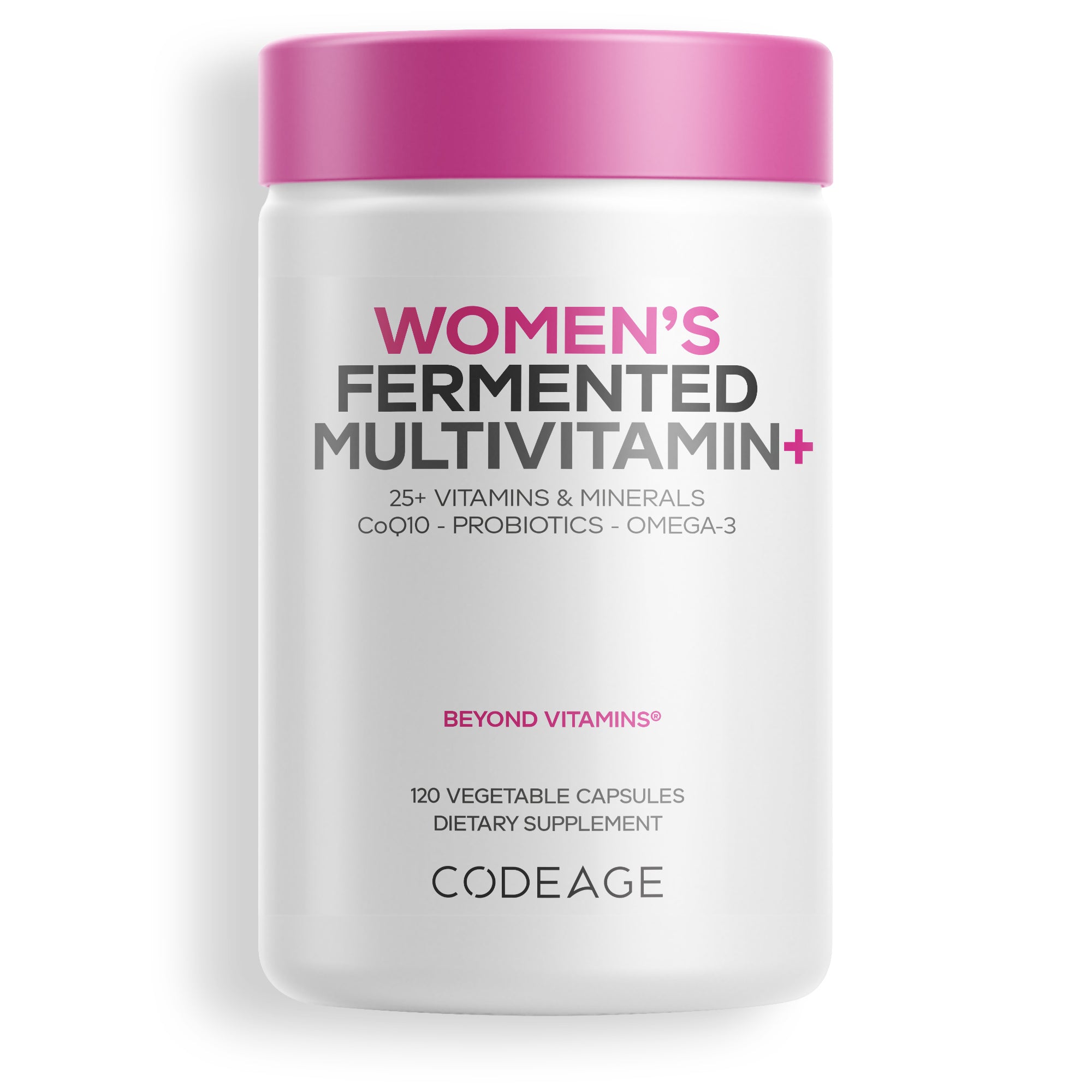
Women's Daily Multivitamin+
Each daily serving lists folate as L-5-MTHF, at 340 mcg DFE, and vitamin B12 as methylcobalamin, at 3 mcg. Alongside them are vitamin B6 as pyridoxal-5'-phosphate, vitamin D3 from lichen and more than 25 vitamins and minerals in total. The bottle holds 60 servings, a 2-month supply.
The other ingredients are a methylcellulose capsule and potassium chloride.
Vegan. Formulated without dairy, soy, or gluten. Non-GMO. Manufactured in the USA in a cGMP-certified facility with global ingredients.
Shop Women's Daily Multivitamin+Continue reading
Further Reading from the Codeage Library
-
Folate
Vitamin 5-MTHF Methylfolate
-
Vitamin B12
Vitamin B12 Methylcobalamin
-
Multivitamins
Inside a Teen Multivitamin
-
The framework
The Longevity Code, the Four-Pillar Daily System
Codeage, The Longevity Code
A System Built for the Long View
The Longevity Code is a four pillar daily system, with every formula mapped to a specific dimension of how the body sustains itself across time.
Join The CodeAnyone who is pregnant or nursing, under 18, has a known medical condition, takes medication or has surgery planned should speak with a qualified healthcare professional before using this product. Do not exceed the suggested use.
Studies referenced were conducted independently and did not involve any specific Codeage product.
This article is educational and is not intended to diagnose, treat, cure, or prevent any disease. These statements have not been evaluated by the Food and Drug Administration.


