






 Iniciar un chat en vivo
 1-800-870-4800
Two Vitamins.
Decades of Research.
What science has studied about ascorbic acid (Vitamin C) and cholecalciferol (Vitamin D3) — and why longevity researchers continue to investigate both.
The Foundation Question
Longevity is built on layers. The first layer is often the most overlooked.
Among the most-studied micronutrients in modern biology, ascorbic acid (Vitamin C) and cholecalciferol (Vitamin D3) occupy a distinctive place. Both are foundational. Both are widespread in their reach across human physiology. And both have accumulated decades of peer-reviewed investigation into their relationship with healthy aging. This article explores what researchers have studied — and what that research means within a longevity framework.
Ascorbic Acid
A water-soluble micronutrient that the human body cannot synthesize on its own. Ascorbic acid functions as both a nutrient and a cofactor in multiple enzymatic reactions studied across cellular and molecular biology. In longevity research, scientists have examined its role in oxidative processes, collagen biosynthesis, and immune cell function.
Cholecalciferol
A fat-soluble secosteroid synthesized in the skin upon UV-B exposure and also obtained through diet and supplementation. Cholecalciferol (Vitamin D3) converts to its active form, calcitriol, which functions as a hormone-like compound. Researchers have investigated its presence in virtually every tissue and organ system with identified receptor sites (VDR) throughout the body.
Research Focus — Ascorbic Acid
What researchers have studied about Vitamin C and aging
The following represents areas of active scientific inquiry. These findings are published research observations and do not constitute medical claims.
Vitamin C as an Antioxidant in Cellular Environments
Researchers have long investigated ascorbic acid's role as a free-radical scavenger. A landmark review published in Free Radical Biology and Medicine examined how ascorbic acid neutralizes reactive oxygen species (ROS) in aqueous cellular environments. Oxidative stress — the accumulation of ROS over time — is a well-documented biological hallmark associated with cellular aging. Scientists have studied whether maintaining adequate ascorbic acid status correlates with markers of oxidative damage in aging populations.
↗ Frei et al., Free Radical Biology & Medicine (1989)The Role of Ascorbic Acid in Hydroxylation Reactions
Vitamin C serves as an essential cofactor for prolyl hydroxylase and lysyl hydroxylase — the enzymes responsible for stabilizing the triple-helix structure of collagen. This biochemical relationship has been studied extensively in dermatology and connective tissue research. A paper in Nutrients (2017) synthesized evidence that ascorbic acid availability appears to directly influence the rate and quality of collagen biosynthesis, linking Vitamin C status to structural tissue integrity across decades of aging.
↗ Pullar et al., Nutrients (2017)Ascorbic Acid and Telomere Length Investigations
Telomere shortening is a central biomarker of biological aging. A study published in the American Journal of Clinical Nutrition examined plasma Vitamin C concentrations alongside leukocyte telomere length in a large adult cohort. Researchers observed that individuals with higher plasma ascorbic acid concentrations tended to have longer telomeres, controlling for lifestyle variables. The authors noted this relationship warranted further mechanistic study to understand potential pathways.
↗ Richards et al., AJCN (2007)Vitamin C Status and Cardiovascular Aging Biomarkers
The EPIC-Norfolk study, one of Europe's largest prospective cohort studies, examined plasma Vitamin C levels in relation to cardiovascular outcomes across 20,000 participants over ten years. Researchers documented a graded, inverse association between plasma ascorbic acid levels and cardiovascular mortality risk — an association that persisted after adjusting for known confounders. The researchers highlighted the need to understand whether this reflects causation or is a biomarker of overall nutritional adequacy.
↗ Khaw et al., The Lancet (2001)Absorption Kinetics: Standard vs. Liposomal Ascorbic Acid
The bioavailability of oral Vitamin C has been a subject of pharmacokinetic research. A study in Nutrition and Metabolic Insights compared plasma Vitamin C concentrations following standard ascorbic acid supplementation versus liposomal encapsulation. Liposomal formulations demonstrated meaningfully higher plasma Cmax (peak concentration) and area under the curve (AUC) values, suggesting the phospholipid encapsulation may significantly alter absorption dynamics — a finding relevant to anyone evaluating vitamin C supplement or liposomal vitamin C formulations.
↗ Davis et al., Nutrition & Metabolic Insights (2016)Cholecalciferol · Vitamin D3 · Vit D3
The scope of Vitamin D3 investigation in longevity science
Vitamin D Receptor (VDR) and Genomic Expression
The vitamin D receptor (VDR) has been identified in over 36 tissue types. A comprehensive review in Nature Reviews Endocrinology described how the active form of Vitamin D (1,25-dihydroxyvitamin D3 / calcitriol) binds to VDR and modulates the expression of genes involved in cell cycle regulation, immune function, and inflammation pathways. The breadth of this genomic reach has made Vitamin D3 a central compound in aging biology research.
↗ Holick, Nature Reviews Endocrinology (2010)Cholecalciferol, Calcium Absorption, and Skeletal Aging
Among the most established areas of Vitamin D research is its role in calcium and phosphorus metabolism. Vitamin D3 is required for intestinal calcium absorption — a mechanism studied in clinical trials examining bone mineral density across aging populations. A meta-analysis in JAMA Internal Medicine examining over 135,000 participants found that Vitamin D supplementation with adequate calcium was associated with reduced fracture incidence in institutionalized older adults. The authors noted results varied by baseline nutritional status.
↗ Bischoff-Ferrari et al., JAMA Internal Medicine (2009)Vitamin D3 and Immunosenescence Research
Immunosenescence — the gradual decline of immune function with age — is a recognized driver of aging-related health challenges. Researchers have identified VDRs on nearly all immune cell types, including T-cells, B-cells, and macrophages. A 2020 review in Nutrients systematically examined the evidence that Vitamin D3 plays a regulatory role in both innate and adaptive immune responses, with particular relevance to aging populations who often present with lower circulating 25(OH)D levels.
↗ Charoenngam & Holick, Nutrients (2020)Vitamin D, Telomere Length, and Cellular Aging Markers
Multiple epidemiological studies have examined the relationship between serum Vitamin D levels and telomere length. A study published in PLoS ONE analyzing data from the U.S. National Health and Nutrition Examination Survey (NHANES) found that higher serum 25(OH)D concentrations were associated with longer leukocyte telomere length in a dose-response pattern. The association held across multiple age groups. Researchers proposed that Vitamin D's anti-inflammatory and antioxidant properties may partly explain observed associations with cellular aging markers.
↗ Richards et al., PLoS ONE (2007)Vitamin D Status in Long-Lived Populations
Research examining the "Blue Zones" and centenarian cohorts has noted consistently that individuals in long-lived populations often display healthy outdoor activity levels and sun exposure throughout their lives — behaviors associated with maintained Vitamin D status. While causation remains complex to establish, a 2012 paper in the Journal of Gerontology examining centenarian biology listed adequate Vitamin D3 among the micronutrients most consistently observed at healthy levels in individuals reaching advanced age. The supplement landscape for vitamin d supplement and vitamin d3 supplement formulations continues to be shaped by this body of research.
↗ Passeri et al., Journal of Gerontology (2008)Cholecalciferol (D3) vs. Ergocalciferol (D2) — What Researchers Found
Not all Vitamin D is equivalent. Researchers comparing cholecalciferol (D3, from animal and UV sources) with ergocalciferol (D2, from plant sources) have found meaningful pharmacokinetic differences. A double-blind RCT published in the American Journal of Clinical Nutrition found that cholecalciferol was approximately 87% more potent at raising and maintaining serum 25(OH)D concentrations. This distinction has become central to formulation choices in the vit d3 and vitamin d3 supplement category.
↗ Heaney et al., AJCN (2011)The Intersection
Why researchers study C and D together
Both vitamins operate across overlapping biological territories — and longevity researchers have noted complementary roles in several shared pathways.
C
D3
Immune Regulation — A Shared Research Domain
Both ascorbic acid and cholecalciferol have been independently studied in the context of immune cell function. A 2020 review in Frontiers in Immunology explored their potential complementary roles, noting that Vitamin C concentrates in immune cells at levels 10–100x higher than in plasma, while Vitamin D3 acts on VDRs expressed on those same cell types. Researchers called for more investigation into combined nutritional strategies and immune resilience across aging populations.
↗ Gombart et al., Nutrients (2020)Two Antioxidant Pathways — Aqueous and Lipid Phase
Human biology operates in two distinct chemical environments: aqueous (water-based, where Vitamin C functions) and lipid (fat-based, where Vitamin D3 is transported). Research has examined how these two micronutrients may address oxidative processes in their respective environments. A review in Antioxidants (2021) discussed the potential significance of ensuring adequate status of both water- and fat-soluble antioxidant compounds for comprehensive oxidative defense in aging adults.
↗ Carr & Rowe, Antioxidants (2020)Form & Delivery
How delivery format shapes the research
Research does not only investigate what a compound does — it investigates how the body receives it.
Liposomal Vitamin C
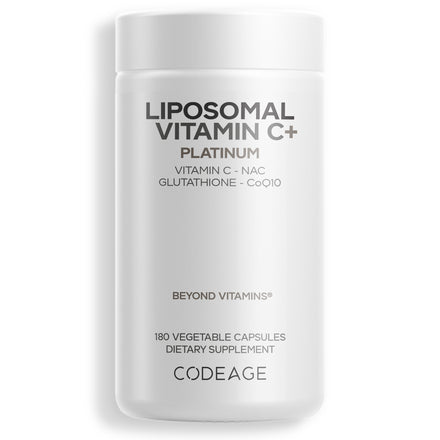
Liposomal encapsulation uses phospholipid bilayers — the same structural material as cell membranes — to protect ascorbic acid during GI transit. Pharmacokinetic studies have demonstrated that liposomal delivery bypasses the saturable intestinal transporter (SVCT) that limits standard vitamin C capsules and ascorbic acid absorption at higher doses. For anyone researching optimal vitamin c supplement formulations, the liposomal delivery mechanism represents one of the most studied innovations in the field.
Vitamin C Supplement · Liposomal Vitamin C · Ascorbic AcidVitamin D3 + K2 — The Cofactor Relationship
Researchers studying cholecalciferol increasingly examine it alongside Vitamin K2 (MK-7). The rationale: Vitamin D3 drives calcium absorption, while Vitamin K2 helps direct calcium to bone tissue and away from arterial walls. A study published in Thrombosis and Haemostasis (2015) found that combined D3 + K2 supplementation showed superior effects on vascular stiffness markers compared to either nutrient alone. The D3/K2 combination has become a central focus in vitamin d3 supplement research and bone-cardiovascular aging investigation.
Vitamin D3 · Cholecalciferol · Vit D3The Longevity Code
Where C and D3 live in the system
Within The Longevity Code framework, both ascorbic acid and cholecalciferol are classified under Pillar 01 — the base layer that everything else depends on.
The base layer is not the most exciting pillar. It is the most important. NAD+ and resveratrol operate on a cellular level researchers are still mapping. Vitamin C and D3 operate on a level researchers have been mapping for over a century — and the evidence continues to deepen.
Continue Reading
Go deeper into the science
What Makes a Great Vitamin C?
A deep-dive into the formulation principles behind premium ascorbic acid supplementation — and what separates a standard vitamin c capsules formula from a precision one.
Vitamin D3: The Complete Guide to Cholecalciferol
Everything researchers and formulators need to understand about cholecalciferol — from synthesis to supplementation to the evolving science of vit d3 and aging.
The Longevity Code · Codeage
Longevity is not a category.
It is a design decision.
Decades of research on Vitamin C and Vitamin D3 converge on a single insight: the body's long-term performance is shaped by inputs made consistently — over years, not weeks. The Longevity Code was built on this premise.
Explore The Longevity Code →Educational content only. The studies cited are independent research and do not represent endorsement by the researchers of any specific product. Consult with a qualified healthcare professional before beginning any supplementation program, particularly if you are pregnant, nursing, taking medications, or have a medical condition.


